How a simple art principle help me see life a little more clearly.
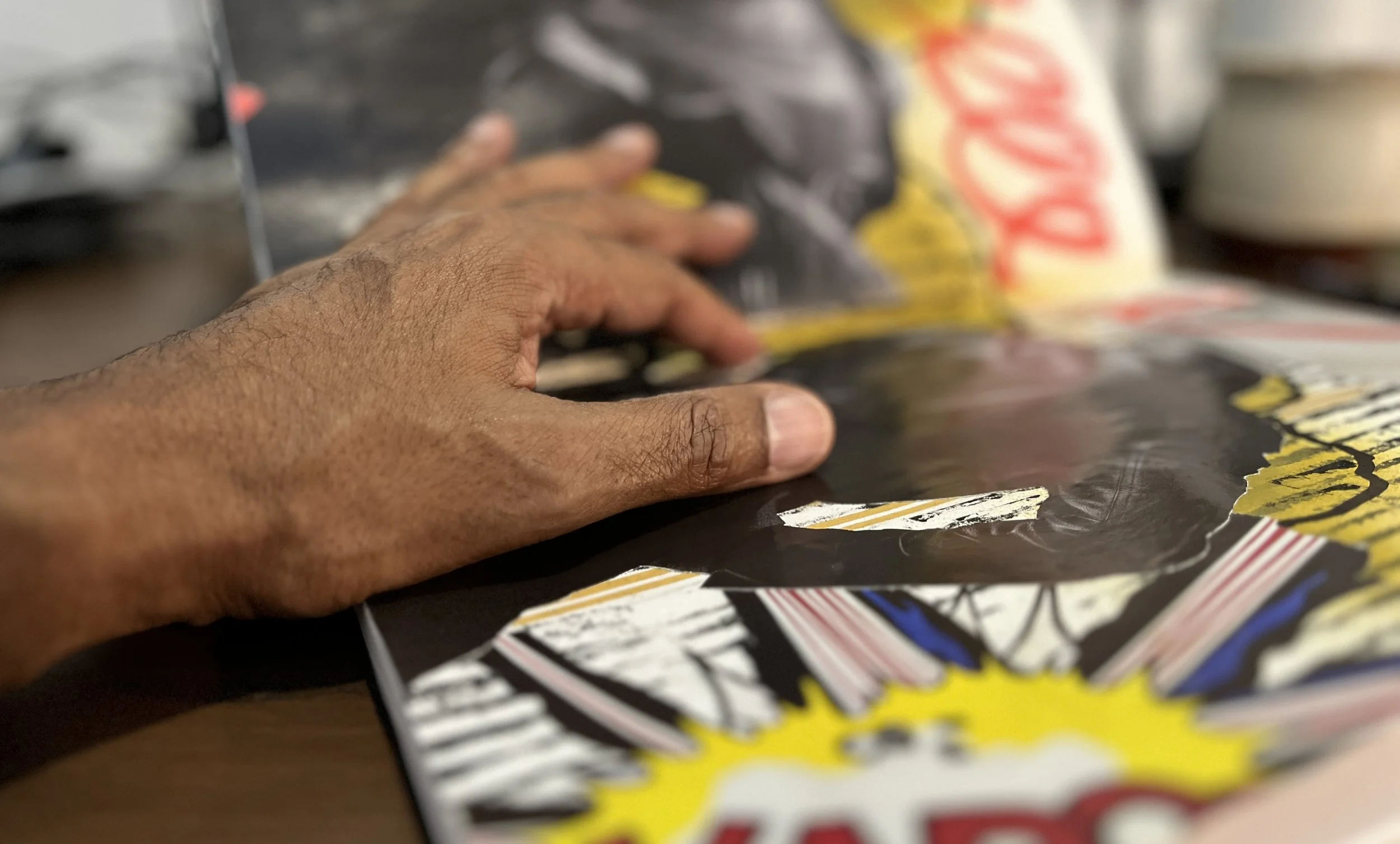
Over the last year, many friends have visited my small atelier in Portugal. They appreciated seeing the space where I work, the pieces I have hanging, and my large box of finished yet unframed collage work. When showing them the unframed pieces, I’ve noticed how their fingers move across each one, tracing the outlines of the shapes and images, exploring where and how the parts connect or overlap and what the collage means. This fascinated me. Because I crafted the pieces, I knew how they were constructed, the crafting of the layers, and what I intended as foreground and background. However, watching my friends as they examined the work, pulled me into an unexpected re-discovery process. As I watched their hands, I found myself re-examining my original intentions about the work. Their exploration provoked me to imagine new stories and possibilities in each piece.
Original photograph by Chris Murchison
Rick Rubin, author of The Creative Act, might say this is an essential part of the making process. “When we share our work we widen our own perspective,” he says. We ask questions we didn’t ask ourselves when we were creating the piece and this new perspective might evolve a piece in a new direction or affirm its expression. That is the magic of artmaking and creative process!
I am drawn to collage because of this kind of magic. Collage inherently asks many questions. The diversity of material sourced, and the images used, invites inquiry from the very start. The 100-year-old manuscript asks something of the contemporary fashion spread. The impressionist painted forest asks something of the photographed brutalist concrete building. The juxtaposition of the images asks questions upon questions in an ongoing creative dialogue.
One of the first questions I encounter when collaging is related to the principle of figure and ground. When composing, I am constantly making decisions about what is foreground and what is background and how different choices help express the story I want to tell. Sometimes this is a simple task, a relatively straightforward story such as a portrait, when there is a clear central figure. But at other times, the work is more complex or abstract, and I play with figure and ground. Sometimes I intentionally confuse the viewer’s eye with an obscured focal point or multiple figures, causing the eye to travel around the page. This is what I observe when friends look at my work, as they draw their fingers across a college piece. They seem to be asking themselves questions – What am I seeing? Where are my eyes drawn? What is figure? What is ground? What are the relationships here? What is this piece saying?
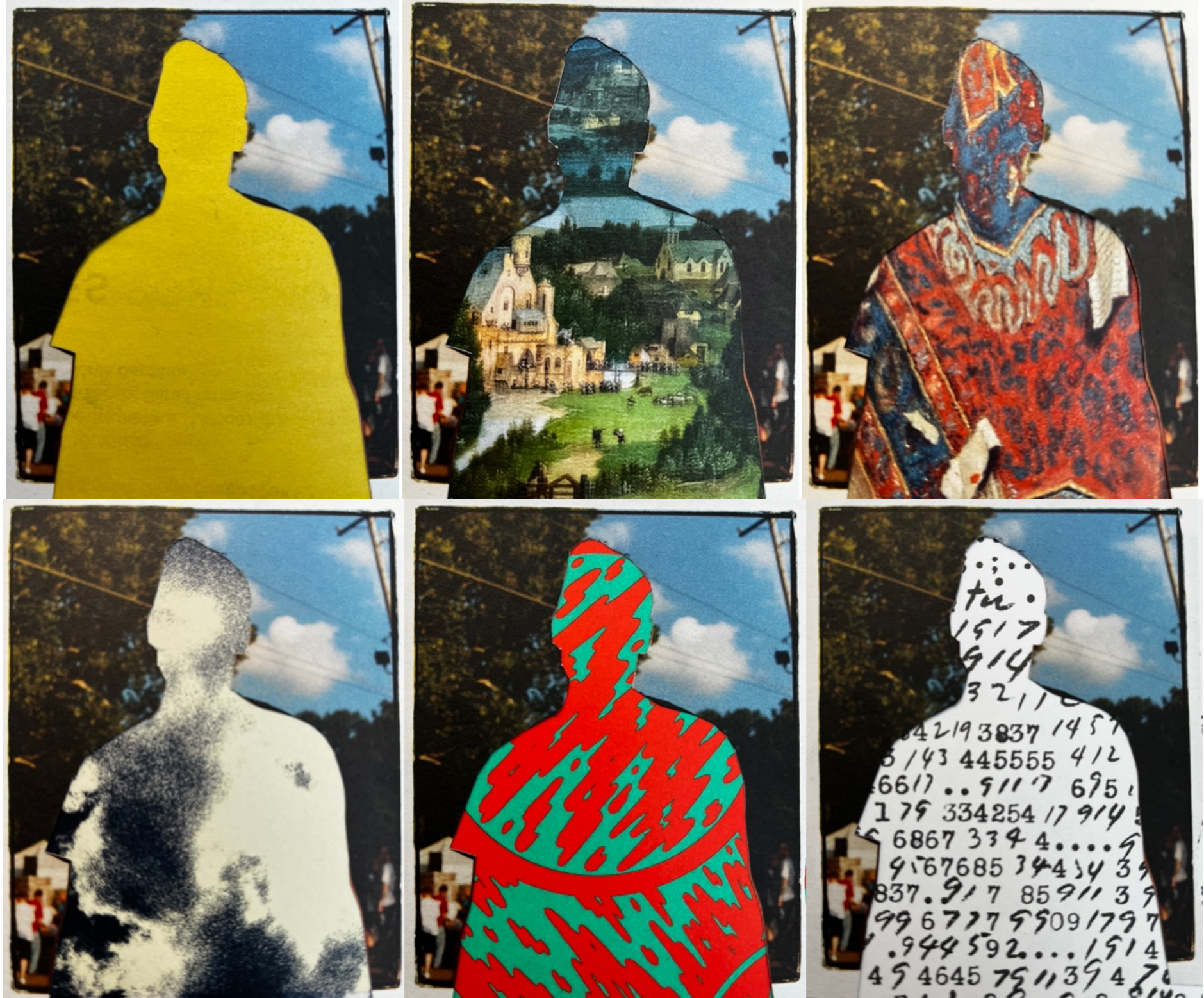
A specific example of how I play with figure and ground is with negative space. Negative or white space is as important as the imagery you choose. One method of creating negative space is through editing, cutting out an image in a larger magazine spread. This makes a window that allows a background to telegraph through. You can still “read” the cutout figure, but the background behind the cutout is what completes the story. If the background is a solid colour, it enhances the figure. However, if you introduce complexity in the background the figure is transformed.
In the images below you can see that I have experimented with different backgrounds for a cutout of a young skateboarder in L.A. The original magazine spread the figure had a compelling urban background - the clouds, trees, and the power lines overhead. I cut out the skateboarder and for effect, played with several alternative backgrounds, starting with a solid yellow and then experimenting with a variety of textures, scenes, and patterns. Each collage has a different feel to it. Each one reads differently, asks different questions, and tells a different story.
Original artwork by Chris Murchison
This kind of creative play fascinates me. Art stirs different thoughts and emotions in each person. I showed these six different versions to friends to see which one they were most drawn to and why. The responses were so varied and the emotions evoked by the different figures and backgrounds were illuminating.
What is your view?
Which version are you drawn to?
What draws you to this collage?
What might this collage be expressing? What might it be saying about you and why you chose it?
What is the mood of the figure in this particular collage? What is it saying?
What is the relationship between the figure and the broader background? How do they influence each other?
What might this collage be asking of you?
My View
I am drawn to the top middle collage. There is something alluring about the landscape within the figure and the landscape of the original magazine spread. They are like competing backgrounds. This makes me pause and confuses my eye. What is the “real” landscape? The real background? The collage seems to ask me about identity and belonging. The complexity and paradox in this collage perfectly captures my feelings today, particularly about transitions.
Five years ago, after living in San Francisco for 29 years, my partner and I relocated to London. A year later we moved to Portugal. Within a short time, I found myself in three very different environments – me as the figure with three backgrounds. On the surface, each move was exhilarating but also disorienting. Each place is its own terrain, with pros and cons that shift regularly over time. This has felt confusing, and this collage somehow captures these feelings for me. Where do I feel most at home? What does home mean to me? Who am I in each place? What is real? I often feel that I should make a decision and choose a place to settle, but this collage encourages me to pause, acknowledge this complexity, and see the beauty in it. The collage asks me to see how the two landscapes – within the figure and in the background – might be complimentary rather than competing, and this perspective helps me better understand and embrace what I am experiencing.
Art helps!
In an unexpected way, this simple art exercise was helpful to me. It raised questions I had not previously considered and allowed me to understand my experience in a new way. Figure and ground was a useful lens through which to enhance my self-awareness. For me this affirmed the usefulness of art! As individuals we exist in numerous environments, figures in various backgrounds – our partner, our family, community, school, workplace, country, etc. Who are we within these different backgrounds? Who might we become? Through art we can explore these questions and discover insights that otherwise might be difficult to capture. And with these insights new choices can be made to increase our wellbeing.